Office | Dongsung Chemical
Karawang, Indonesia
Concept Design
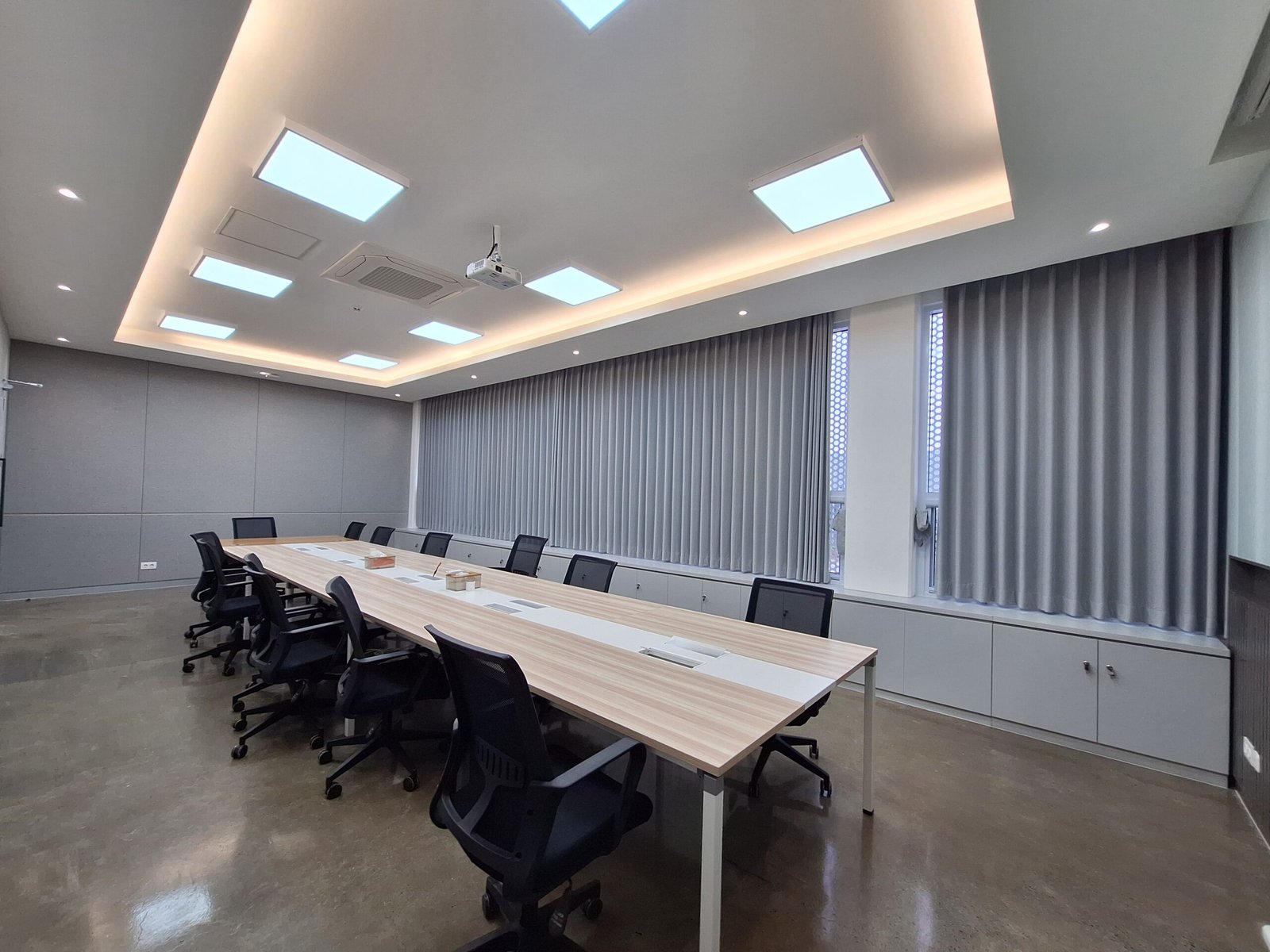
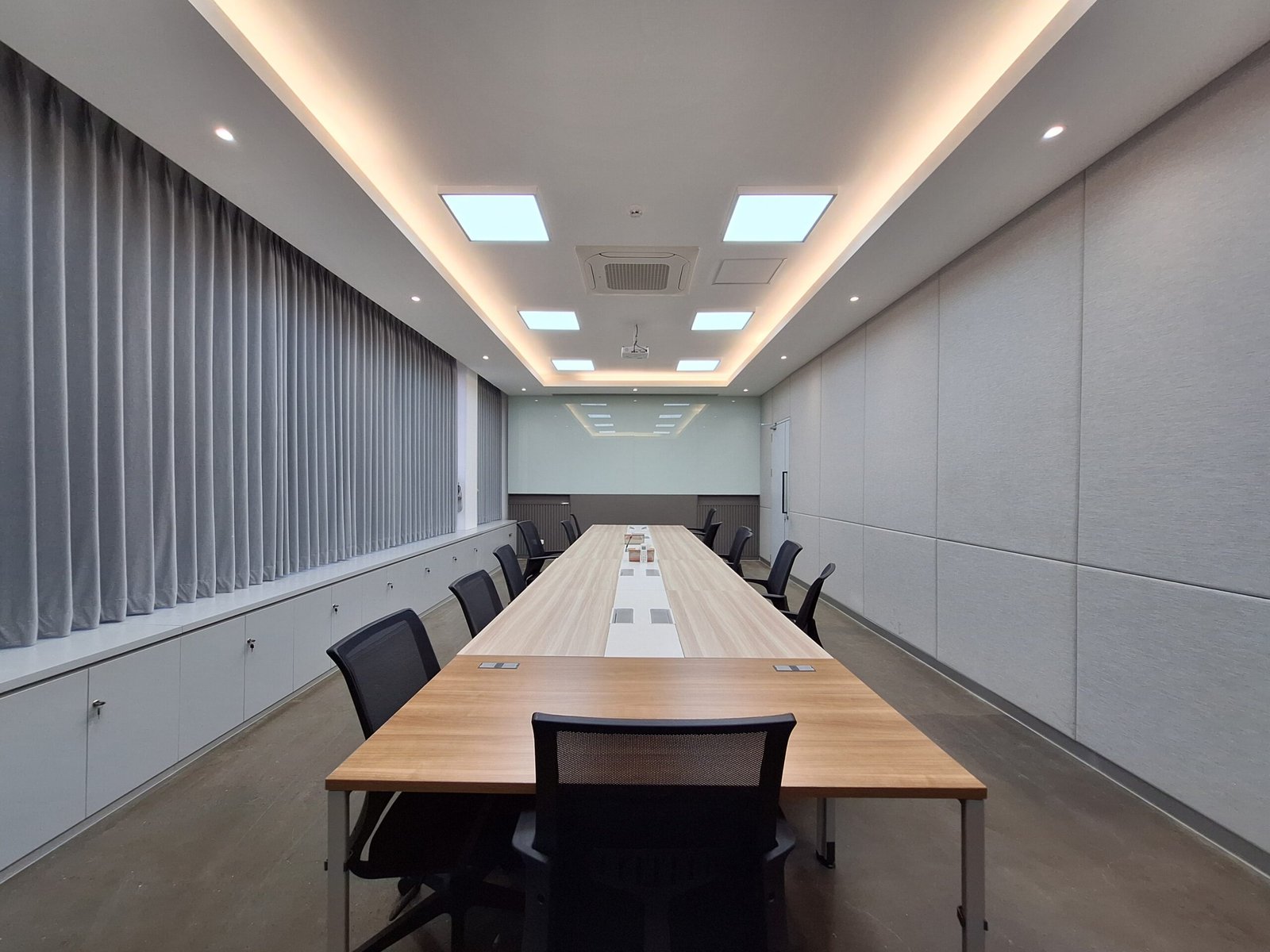
This office design embraces a modern minimalist workspace concept that prioritizes natural light, visual openness, employee comfort, and collaboration. The space combines clean architectural lines, neutral color palettes, and soft furnishings to create a professional yet welcoming environment.
1. Open-Plan Workspace
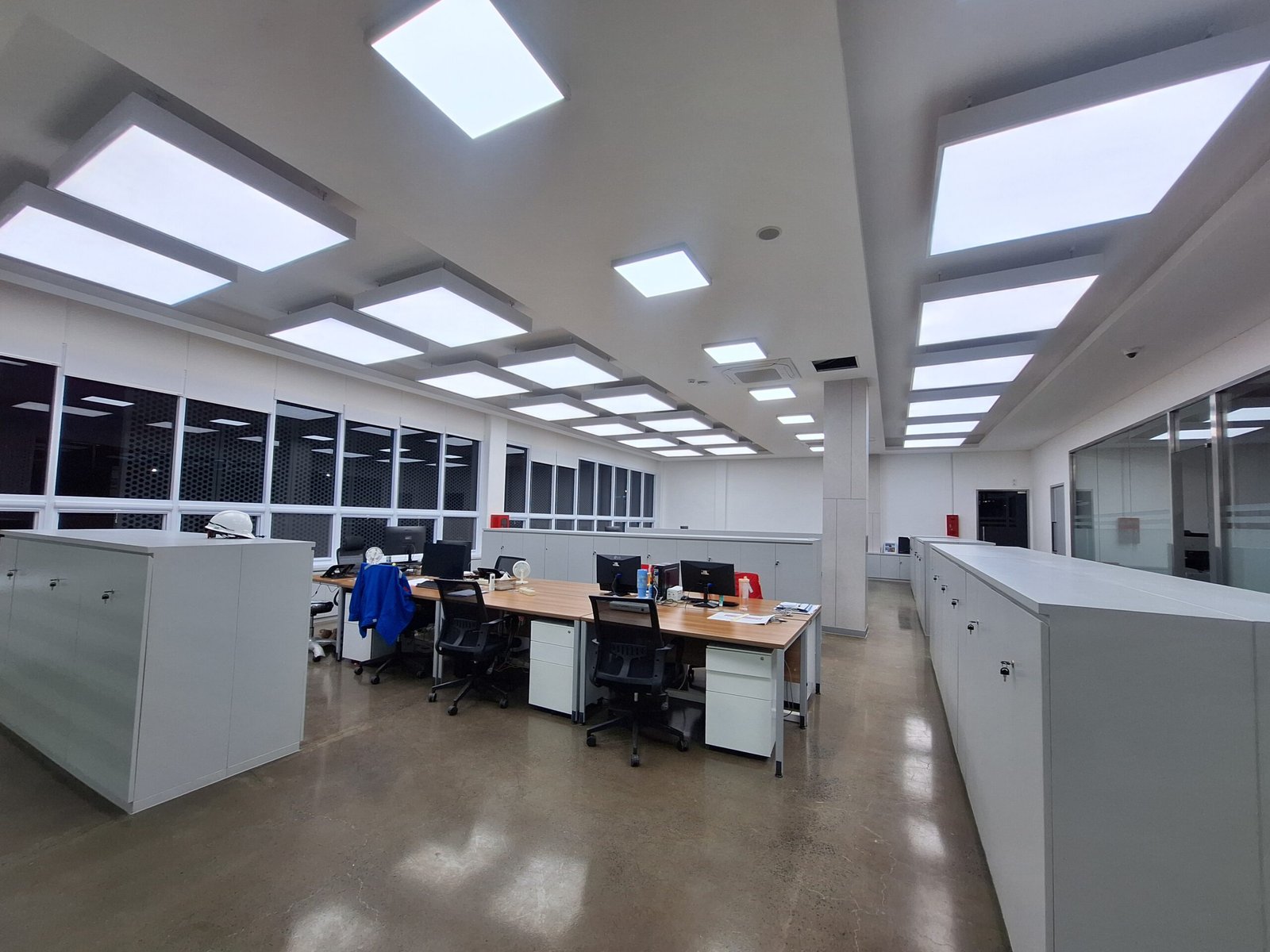
- The office utilizes an open-layout arrangement with low-height workstations.
- This configuration encourages communication, teamwork, and flexibility while maintaining individual work zones.
- The long visual axis creates a sense of spaciousness and organizational transparency.
2. Architectural Lighting Strategy
- Large suspended LED panel lights provide uniform illumination throughout the workspace.
- The geometric arrangement of the fixtures reinforces the contemporary aesthetic.
- Bright, glare-free lighting improves visual comfort and productivity.
3. Natural Light Integration
- Floor-to-ceiling windows along one side maximize daylight penetration.
- Perforated exterior screens help reduce heat gain and glare while maintaining outdoor views.
- The abundance of natural light contributes to employee well-being and energy efficiency.
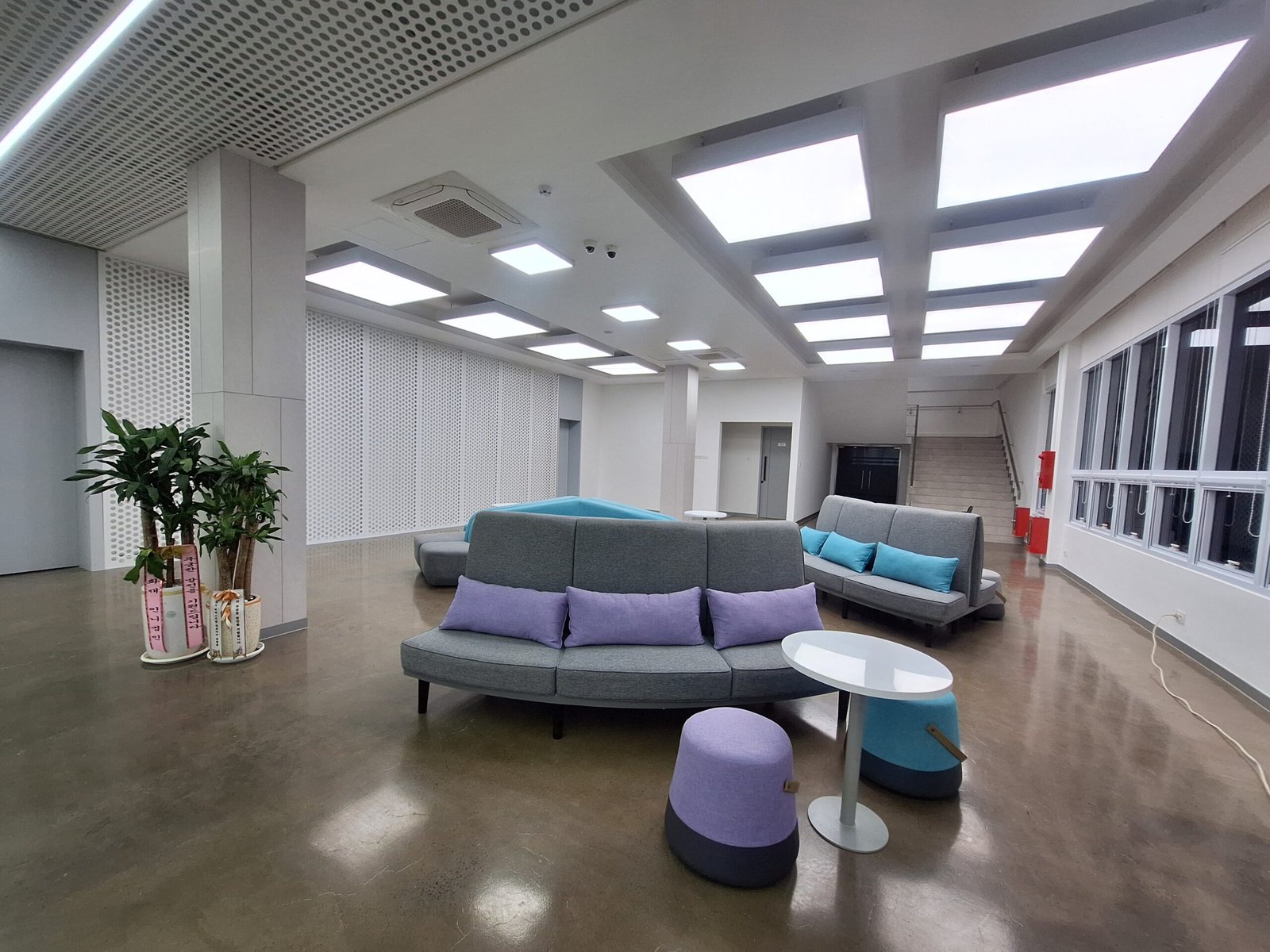
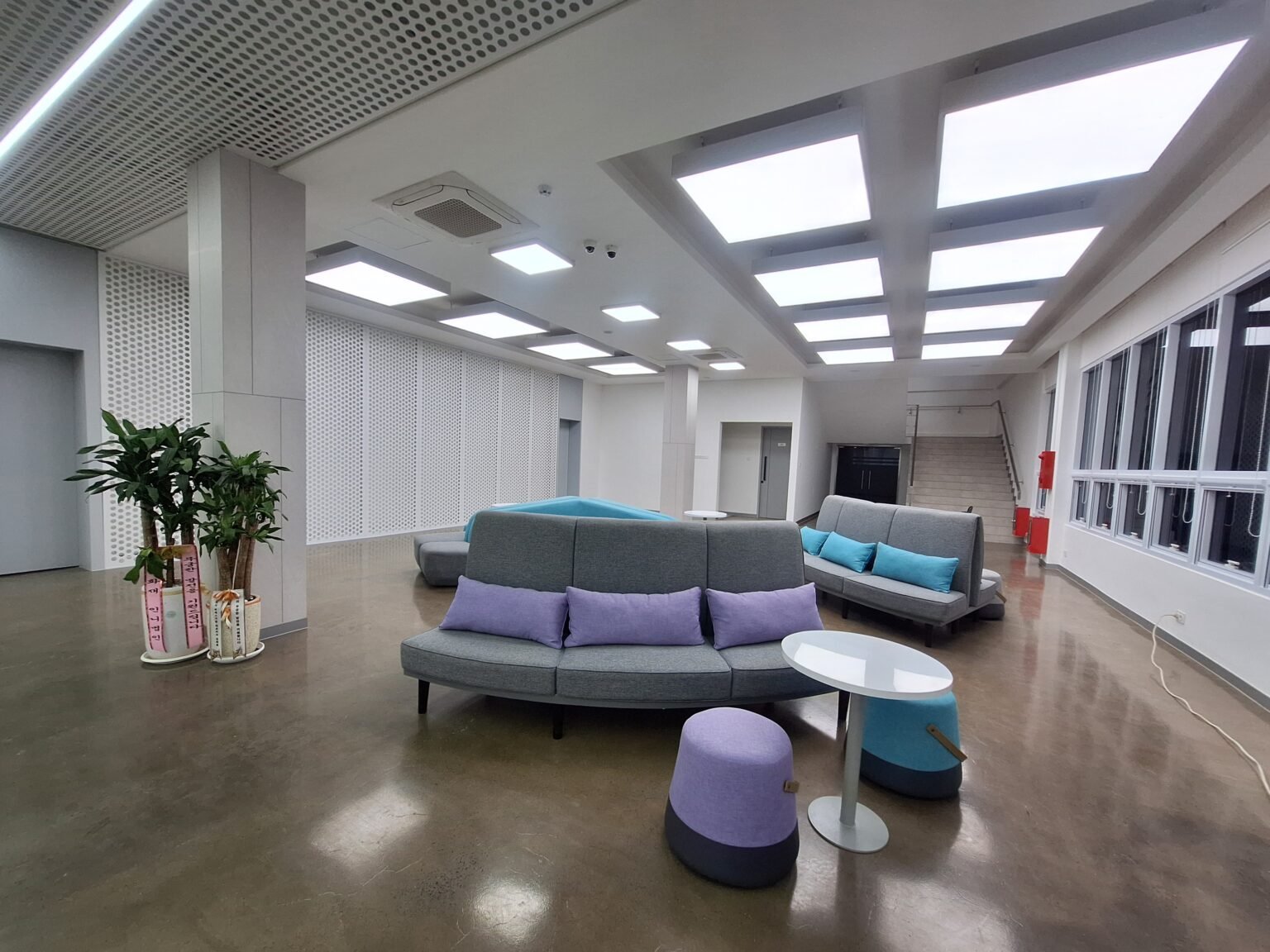
4. Collaborative Lounge Area
- Semi-enclosed booth seating creates informal meeting zones within the open office.
- High-back sofas provide acoustic privacy for discussions, brainstorming sessions, or focused work.
- Round tables and movable stools support flexible interaction and spontaneous collaboration.
5. Contemporary Material Palette
- Neutral gray upholstery conveys professionalism and timeless elegance.
- Polished concrete flooring adds an industrial-modern character while ensuring durability.
- Glass partitions maintain visual openness while defining enclosed office areas.
6. Accent Color Application
- Purple and turquoise cushions introduce vibrant accents to the otherwise monochromatic interior.
- These colors create a youthful, creative atmosphere without overwhelming the space.
- The accents help distinguish collaboration zones from the primary work areas.